

Senior screening usually begins around age seven for most dogs, age ten for most cats, and a year or two earlier for large and giant breeds whose lifespans run shorter. The first senior visit sets the baseline: a complete blood count, chemistry panel, thyroid values, urinalysis, and chest and abdominal radiographs. Those numbers and images become the reference point everything else gets compared against, which lets us catch kidney disease, thyroid imbalance, or an early mass before your pet looks sick. Pets often hide age-related disease well, and the gap between ‘looks fine’ and ‘feels fine’ can stretch a year or longer.
St. Petersburg Animal Hospital and Urgent Care offers senior wellness exams and early disease screening with transparent pricing, and our family-owned hospital keeps the whole workup under one roof at prices you can plan for. We walk through every result with you so you understand what each finding means before anything happens next. Whether your senior dog or cat is due for that first baseline or it’s time for their regular checkup, send us a message and we will get the screening on the books.
The Senior Screening Essentials
- Most dogs are considered senior around seven, most cats around ten, and large-breed dogs a year or two sooner, which is when baseline screening becomes worth doing.
- Bloodwork, a urine test, blood pressure, and imaging catch kidney disease, thyroid trouble, heart changes, and early masses long before your pet acts sick.
- Tracking results over time matters as much as any single number, because a trend heading the wrong direction shows up before a value ever leaves the normal range.
- Our in-house lab and on-site digital X-ray and ultrasound keep the whole senior workup under one roof at prices you can plan for.
What Does a Full Senior Workup Actually Include?
A full senior workup usually layers bloodwork, a urine test, blood pressure, and imaging when it is warranted. There is no single test that checks everything and no identical checklist for every animal, so the exact mix depends on age, breed, and history. A ten-year-old cat losing weight gets a different workup than a healthy eight-year-old Lab.
Current senior pet care recommendations shape which pieces a given pet needs. We build the plan around your pet, then talk it through with you before anything happens. Our diagnostic workups for dogs and cats can be as focused or as complete as the situation calls for, and you always know what each piece is looking for and why.
Does a Physical Exam Miss What’s Happening Inside an Older Pet?
A hands-on exam tells us a lot, but it only sees the outside. An older dog can have kidney values climbing or a thyroid slowing down while she still greets you at the door and cleans her bowl, because pets are built to mask weakness. That is why senior care leans on lab work and imaging, and why we move from once-a-year visits to twice-yearly ones as pets age.
Twelve months is a long time in a senior body. A dog ages roughly four to seven human years in that span, so waiting a full year between visits is like a person skipping the doctor for most of a decade. Two shorter windows let us catch a shift while it is still small.
Catching a problem while a pet still looks and acts healthy is the whole point of preventive testing, because most age-related diseases are far easier to manage before outward signs show up. The real power comes from repetition. A single result tells you where a pet sits today. Two or three results over a couple of years tell you which direction they are heading, and a value that is still technically “normal” but has crept upward every visit is often the earliest warning we get. Those trends are exactly what twice-yearly wellness visits with targeted screening are built to catch.
What Story Does Blood Work Tell About an Aging Dog or Cat?
Blood work is an internal snapshot of organ function and blood cells, and it shows trouble weeks to months before it surfaces as a symptom. Run at the first senior visit, it becomes the baseline everything later gets measured against. A few core tests do most of the heavy lifting.
Our in-house bloodwork means we read these here rather than waiting on an outside lab.
| Test | What it measures | What it can catch |
| Complete blood count (CBC) | Red cells, white cells, platelets | Anemia, infection, inflammation, some cancers |
| Chemistry panel | Kidney, liver, protein, blood sugar, electrolytes | Kidney and liver disease, diabetes, dehydration |
| Thyroid (T4) | Thyroid hormone level | Low thyroid in dogs, overactive thyroid in cats |
| Heartworm and tick-borne | Exposure to heartworm and tick-carried infections | Heartworm disease, Lyme, ehrlichiosis, anaplasmosis |
Each result matters more when we can hold it next to last year’s. A creatinine that jumped within the normal range, a red cell count drifting down, a liver value ticking up: none may mean much alone, but as a trend they point us somewhere specific. That comparison is the whole reason the first baseline is worth doing while your pet still feels great.
What Does a Urine Sample Add That Blood Values Miss?
A urine test reads what the kidneys are actually producing, which fills in blind spots that blood work alone leaves open. It shows how well the kidneys concentrate waste, whether protein is leaking where it should not, and whether sugar, blood, or bacteria are present. Together with a chemistry panel, it turns guesses into a clear picture.
A urinalysis flags trouble with the kidneys, hidden urinary infections, diabetes, and bladder disease, and paired with a chemistry panel it tells a far more complete story than blood values alone. Dilute urine can reveal kidneys slipping even when blood values still look fine, and glucose spilling into the urine can be the first hint of diabetes. It is a small sample that answers a lot of questions.
Why Should Blood Pressure Be Part of Every Senior Visit?
Blood pressure is one of the quietest problems in senior medicine because there is rarely an outward sign until damage is done. High pressure strains the small vessels feeding the most sensitive organs, and by the time you would notice anything, the harm is often already underway. That is why a pressure reading belongs in a senior workup, not just an emergency one.
Hypertension rarely announces itself, yet elevated pressure steadily damages the kidneys, heart, and brain and frequently rides along with conditions like kidney disease and an overactive thyroid. One of the cruelest consequences is sudden blindness from retinal detachment, which can strike without warning and is sometimes the first clue that a pet’s pressure has been dangerously high.
The reading itself is painless. A small cuff goes on a leg or the tail, much like at a human checkup, and it takes only a few minutes. When numbers run high, we look for the underlying cause and can often manage the pressure with a daily medication while we treat what is driving it. If you want us to measure your pet’s blood pressure as part of a senior visit, it is a simple add-on that can save a lot of heartache.
Is It Worth Checking a Senior Pet’s Heart Before Symptoms Show?
Checking a senior pet’s heart before symptoms show is worth doing, and the reason is timing. Heart disease often advances silently for months or years, so a cough, tiredness, or heavy breathing tends to show up late in the story rather than early. Cardiac screening is about finding the change while there is still room to act, and the tools are gentle enough that most pets barely notice them.
Screening for heart disease matters even when a pet seems perfectly fine, since the heart can be quietly struggling long before a cough, tiredness, or labored breathing gives it away. A few noninvasive tools cover most of the ground:
- NT-proBNP is a blood-based option that measures a marker the heart releases when it is stretched or strained, which can surface a developing problem before it turns into a crisis.
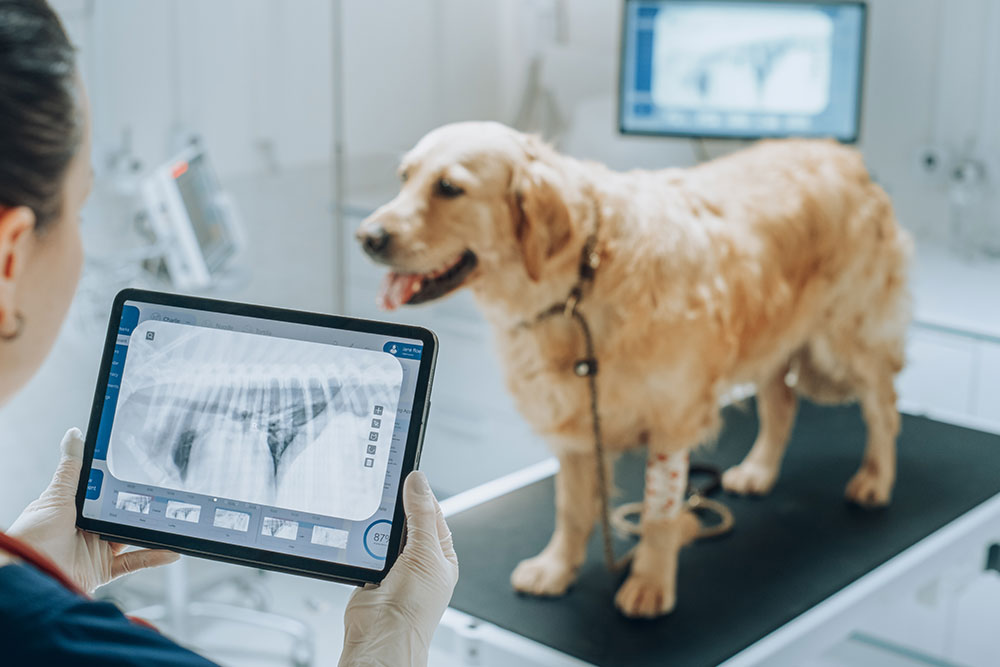
- Chest X-rays show the heart’s size and shape and whether fluid is backing up into the lungs, which we can capture on our on-site digital X-ray.
- Echocardiogram, an ultrasound of the heart, is the detailed look; it shows the chambers, valves, and pumping strength in real time, and we refer for advanced cardiology imaging when a case calls for it.
- ECG traces the electrical rhythm and is the tool for sorting out an irregular or abnormal heartbeat.
None of these hurt, and most take only minutes. Which ones a pet needs depends on what we hear through the stethoscope and what shows up on the rest of the screening. Breed matters, too. Some pets are predisposed to heart disease, like Cavalier King Charles Spaniels and Chihuahuas. We’ll provide personalized recommendations for your individual pet’s risk factors.
What Do X-Rays and Ultrasound Reveal When the Numbers Point Somewhere?
Imaging comes into a senior screening when we need to see inside, either as part of a first baseline or to chase down something an exam or lab result flagged. X-ray and ultrasound answer different questions, and often work best as a pair, one showing the outline and the other the detail.
X-ray gives a fast, big-picture look at the size and shape of the heart, lungs, and abdominal organs, which makes it a natural first imaging step when something on an exam or lab result needs a closer look. It’s also ideal for evaluating skeletal issues and arthritis when senior pets are experiencing pain. When a problem calls for detail an X-ray cannot provide, ultrasound looks inside soft-tissue organs in real time, showing the internal texture of the liver, kidneys, spleen, and bladder without a single incision. Both live under our roof, so we can move from an X-ray to an ultrasound in the same visit and walk you through what we are seeing as we go.
Which Diseases Do These Tests Set Out to Catch?
Senior screening is not fishing in the dark. It is aimed at a specific set of conditions that show up again and again in aging dogs and cats, most of them treatable and far more manageable when caught early. Here is what the labs and images are really hunting for, grouped by what tends to catch them.
Diseases of Internal Organs in Senior Dogs and Cats
Internal organ dysfunction is often quiet until the disease has progressed significantly, but can be caught by bloodwork and urine before you would notice a thing:
- Low thyroid in dogs: hypothyroidism slows the metabolism into weight gain, sluggishness, and a dull or thinning coat that families often chalk up to getting older, though a simple blood test confirms it and a daily pill sets it right.
- Overactive thyroid in cats: cats swing the opposite direction with hyperthyroidism, where a revved-up thyroid drives weight loss despite a ravenous appetite, restlessness, and a racing heart, all of which can be reined in with medication, a special diet, radioiodine, or surgery.
- Kidney disease: chronic kidney disease is one of the most common conditions in older pets, and because a pet can lose most of their kidney function before showing a single symptom, screening is often the only thing that catches it early enough to slow it down.
- Liver disease: bloodwork often flags liver disease before you see the vomiting, poor appetite, or yellow-tinged gums that come later, and early management can protect a lot of function.
- Heart disease looks different by pet: small dogs most often get mitral valve disease, big breeds are prone to dilated cardiomyopathy, while cats tend toward hypertrophic cardiomyopathy instead.
Once diagnosed, management of the conditions through our internal medicine services for dogs and cats can add comfortable years to your pet’s life.
Cancer, Joint Pain, and Dental Disease
Cancer is increasingly common as pets age. Routine exams and imaging help us find tumors early, and catching it early opens up more treatment options. Most lumps turn out to be nothing, but the ones that matter are caught fastest this way. Lymphoma, splenic tumors, bone cancers, and multiple others are all more common as pets get older, and many can be found early through regular screening. A new or changing lump is always worth a same-day look.
Arthritis and joint pain causes stiffness, hesitation on stairs, and behavior and routine changes. We confirm arthritis with exams and X-ray, and manage it with joint supplements, weight control, and pain medications. New monthly injections, like Solensia for cats and Librela for dogs, can ease arthritic pain and restore the movement they’ve been avoiding without the burden of daily medications.
Dental disease is a major contributor to pain and inflammation in seniors. Plaque and tartar build up over the years, destroying the bone around teeth and causing infection hidden under the gumline. Dental care matters for the whole body because mouth bacteria strain the heart, liver, and kidneys, and a professional cleaning under anesthesia is the real fix. We pair professional dental cleanings with pre-anesthetic bloodwork so we know your senior pet is safe before anesthesia. Many pet families say their dog or cat acts years younger after a cleaning.
Which Warning Signs Mean Your Senior Pet Needs a Same-Day Visit?
Some changes call for a fast look, not a scheduled recheck. A new or changing lump, sudden blindness, collapse, labored breathing, or a sharp drop in appetite or energy all deserve attention right away. When something looks off between screenings, act on it the same day.
A senior pet ages much faster than a human, so what seemed minor a few months ago can become an urgent problem today. If something urgent surfaces, we offer same-day and walk-in care during our regular hours, so you are never left guessing whether a worrying sign can wait.
Senior Screening Questions Pet Families Ask Us Most
My pet seems totally healthy. Is screening really necessary?
That is exactly when screening is most useful. Dogs and cats are wired to hide illness, so “seems healthy” and “is healthy” are not the same thing in a senior pet. A baseline taken while your pet feels great gives us the numbers to compare against later, and it is far better to confirm everything looks good than to discover a problem after symptoms force the issue. Screening a healthy senior is not overkill; it is the point.
How often does my senior pet need screening?
For most seniors, twice a year is the sweet spot, with lab work at least annually and more often once we are tracking a specific concern. The jump from yearly to twice-yearly visits matters because a lot can shift in a senior body over twelve months. Your pet’s exact schedule depends on age, breed, and any conditions we are already watching, and we will map that out with you.
What if screening turns up something surprising?
Then you are ahead of it, which is the whole goal. Finding a problem early almost always means more and better options, from a simple diet change to a daily pill to a manageable treatment plan. We go through every result with you in plain language, explain what it means and what it does not, and decide the next step together.
Start Your Senior Pet’s Baseline While the Timing Is Still on Your Side
The quiet truth of senior care is that the diseases we fear most in older pets are usually the ones we can do the most about, as long as we find them early. That is all screening really is: a head start. A baseline while your dog or cat feels great, then a steady eye on the trends, so small changes get caught while they are still small.
Our wellness packages for senior pets in St. Petersburg are a great way to bundle your dog or cat’s annual wellness needs into a convenient price. When your senior pet is due for that first baseline or a twice-yearly recheck, reach out to us and we will get it on the calendar.




Leave A Comment